Recent Ruling by NLRB Means its Probably Time to Update Your Employee Handbook

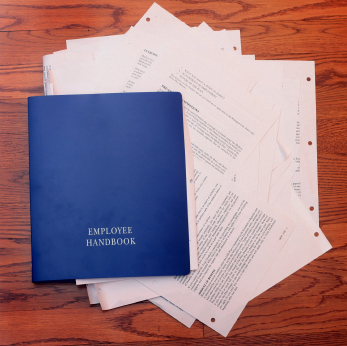
Employee Manual.jpgMost employers understand that an employee manual is a cornerstone of good HR best practices. Unless, however, the National Labor Relations Board (NLRB) says otherwise, which means your company's employee handbook could be a source of liability.

This point was recently illustrated in a recent decision where the NLRB affirmed a finding that DirectTV's employee policies violated the National Labor Relations Act (PDF).

At issue in this matter were four rules - two provisions in the employer's employee handbook and two corporate policies maintained by the employer's intranet system - violated the NLRA because employees could reasonably construe workplace policies as prohibiting Section 7 activity.   

Communications with Media and Violating the NLRA

The employer's handbook contained a provision entitled “Communications and Representing DIRECTV,” which expressly instructed employees as follows: “Do not contact the media.” The employer's handbook also contained a provision that read: “Public Relations,” which advised employees that “Employees should not contact or comment to any media about the company unless pre-authorized by Public Relations.”

The NLRB considers any rule that requires employees to secure permission from their employer as a precondition to engaging in protected concerted activity on an employee’s free time and in non-work areas is unlawful." Accordingly, it is not surprising that these provisions were found to be in violation of the NLRA. 

Restriction on employee communication with Law Enforcement Violated the NLRA

The employer's handbook also contained a section that provided: “If law enforcement wants to interview or obtain information regarding a DIRECTV employee, whether in person or by telephone/email, the employee should contact the security department in El Segundo, Calif., who will handle contact with law enforcement agencies and any needed coordination with DIRECTV departments.”

Many employers will probably be surprised to learn that the NLRB found this to be a violation of the NLRA (Section 8(a)(1) to be specific). In fact, the NLRB even acknowledged such provisions make business sense and may actually favor the employee: 

[W]e acknowledge that an employer may, in some circumstances, have a legitimate interest in knowing about law enforcement agents’ attempts to interview employees. For example, an employer may wish to ensure that the employees have the opportunity to be represented by counsel during such interviews.

However, the NLRB went on to decide the employer's rule was "ambiguous" in that it failed to distinguish situations where it would be appropriate for an employer to first engage law enforcement from protected employee contacts with agents of the NLRB or other law enforcement officials. 

Employer Confidentiality Rules as a Violation of the NLRA

The employer's handbook also contained a provision entitled, “Confidentiality,” that instructed employees to “[n]ever discuss details about your job, company business or work projects with anyone outside the company” and to “[n]ever give out information about customers or DIRECTV employees.”

This provision also was found to be violative of the NLRA. Specifically, the NLRB concluded that because the rule expressly included “employee records” as one of the categories of “company information” that must be held confidential, the restriction would reasonably be understood by employees to restrict discussion of their wages and other terms and conditions of employment - a right protected under the NLRA.

Intranet policy on “Company Information”

The fourth rule that the NLRB found to violate the NLRA had to do with the employer's corporate policy displayed on its intranet that read: “Employees may not blog, enter chat rooms, post messages on public websites or otherwise disclose company information that is not already disclosed as a public record.”

The NLRB went to great lengths to conclude that while this policy itself referenced only unspecified “company information,” when it was read in connection with the employer's handbook "Confidentiality" provision discussed above, it was presumed that “company information” includes “employee records.”

Accordingly, an employee who reads the two policies in tandem would understand the intranet policy to prohibit disclosure of “employee records,” which would include information concerning their own or fellow employees’ wages, discipline, and performance ratings, which is a violation of the NLRA.

Perhaps in recognizing that not every employee would go to such lengths to reach this conclusion, the NLRB noted that "at the very least, the scope of 'company information' in the intranet policy is ambiguous" and under NLRB precedent, “employees should not have to decide at their own peril what information is not lawfully subject to such a prohibition.”

The Take Away for Employers

The first point employers need to realize is that the NLRA generally applies to private sector, non-unionized workforces.

Second, the NLRB will continue to closely scrutinize employer/employee relations outside of the union environment pursuant to its promoting public awareness of rights under the NLRA strategy. In this regard, attorney John Holmquist noted that this agenda was made clear at last year's ABA Labor and Employment Section where members of the NLRB spoke: 

[Chairman Pearce] said that the Board will continue to pursue public awareness since 'A right only has value when people know it exists.' In difficult economic times, employees need to see for themselves and understand what protected, concerted activity is. He said it is one of the best kept secrets of the NLRA. 

Third, similar or variations of the preceding offending provisions are common to a company's employee manual. In light of decisions like the above and the NLRB's intent to focus on its "public awareness" campaign, companies and their HR department need to closely review their existing employee handbooks as well as all other policies or procedures intended to apply to the employer/employee relationship. This includes technology, email, and social media policies.

For more information about drafting or updating your company's employee manual, as well as other questions about Michigan or federal employment laws, contact Jason Shinn

Survey Answers Questions About Improving Employee Relations: Add Meaning

Line of Questions.jpgThe Detroit Free Press released its fifth annual Top Workplaces to Work finalists of Metro Detroit employers. Congratulations to all the 2012 finalists.

One point that jumps out from the results of the employee surveys submitted (my understanding is that these surveys are submitted anonymously) is the critical value employees placed on cultivating a meaningful "connection" between them and their company. Specifically, employees placed high value on feeling appreciated at work and confident about their future. They also value work that makes them feel like part of something meaningful.   

It is noteworthy that these concerns received higher priority by employees than pay and benefits, managers, and work expectations. 

Based on my employment law and trial experience, however, these results are not entirely surprising. Even in bitter litigation where one side is fighting "tooth and nail" for monetary damages, it is common for a scorned former employee to simply want to "tell their story" about being mistreated at the hands of management. And it is equally common defending such claims - with all the benefit of hindsight - to see at any number of points how a particular lawsuit could have been avoided or, at least, the chance minimized if some degree of common sense or attempt to meaningfully resolve an issue by management.

In this regard, one of the best business books I've read was by written by Ari Weinzweig of the Zingerman's family of restaurants in Ann Arbor. In it, Mr. Weinzweig included his view on the proper management of employee relations:  

Here at Zingerman's we've always taken the approach that we were going to treat people who choose to work with us as if they were volunteers ... Ultimately people want to feel that their work makes a positive difference, that their extra efforts are noticed; that they can improve the quality of their lives and the lives of those around them through their work ... If you want the staff to give great service to customers, the leaders have to give great service to the staff.

A Lapsed Anarchist's Approach to Building a Great Business. It is apparent to anyone that has been to any of the Zingerman's restaurants that the business practices what it preaches.  

I'm not naive enough to walk away completely from an employment law and litigation mantra of "planning for the worst, while hoping for the best." But as employers and employees head into the Holiday season, especially Thanksgiving, adding Mr. Weinzweig's approach to employee relations to your employee relations toolbox might be a good thing for the bottom line and for managing employment law risks in the long term.  

Mergers & Acquisitions: Don't Forget About Employee Compliance with Nondisclosure Agreements

Building BlockThe cornerstone of merger and acquisitions - the buying and selling of all or part of a business - is the non-disclosure agreement. And similar to the critical role a cornerstone has in building a foundation, the nondisclosure agreement also serves as the reference point for completing a business transaction. 

However, a recent lawsuit filed in federal district court illustrates the importance companies and their employees need to place on complying with nondisclosure obligations throughout the purchase transaction.   

Due Diligence and Nondisclosure Agreements in M&A

Nondisclosure agreements are often signed at the beginning of the merger or acquisition under consideration. It generally is intended to facilitate the exchange of often highly confidential information between a buyer and a seller usually as part of the purchasing company's due diligence process.  

Nondisclosure agreements also provide a measure of protection for companies who rightly worry that word of a potential sale will hurt business, jeopardize customer or supplier relationships, and undermine employee morale if the sale does not take place.  

Liability for Breaching a Nondisclosure Agreement

In 2011, Catalent Pharma Solutions was in talks to sell its U.S. commercial pharmaceutical packaging business to Sharp Corp., reportedly for $80 million. At the time of these talks, Sharp was a U.S. division of United Drug, PLC. 

The parties entered into a nondiscolsure agreement and pursuant to that agreement, Catalent considered these talks to be confidential as well as the information exchanged between Sharp and Catalent.

But United Drug's CEO took a different view: In two separate public conference calls United CEO discussed the potential sale, valuations of Catalent, and how  the sale would affect the U.S. market in favor of United Drug. Discussions between Catalent and Sharp ended without a deal being consummated between them. 

Catalent Pharma eventually sued Sharp and United Drug for damages arising from a breach of the non-disclosure agreement based on the allegedly unauthorized and improper disclosure of Catalent's confidential and sensitive business information by its parent company's CEO.  

A key issue in Catalent's lawsuit will be whether Sharp's parent company (United Drug) was bound by the nondisclosure agreement. In this regard, Catalent claims in the lawsuit that United Drug executives were involved in the deal discussions and, therefore, were "representatives" under the nondisclosure agreement.  

Take-aways for Employers

When it comes to mergers and acquisitions, the Catalent lawsuit makes clear that a nondisclosure agreement is only a piece of paper, which can be easily violated. And even if a violation is discovered, they can be expensive to litigate. Therefore, it is important to manage the flow of confidential information. To properly manage this flow, here are a few points companies should consider: 

  • Digital Deal Rooms. I have become a big fan of using digital deal rooms for sharing information, including in conducting due diligence matters. These are secure online virtiual deal rooms where documents are stored and shared. Two great features are establishing permission-based roles and creation of audit trails. In this regard, the Catalent complaint noted the number of times confidential documents were reviewed.   
  • Sequence the Disclosures. The purpose of a buyer's due diligence is to obtain enough information for the buyer to make an offer. But this doesn't mean that a buyer needs every data point all at once. Instead, information could be provided in a phased approach so that "crown jewel" type confidential information would be disclosed at the end of the due diligence period or only after a definitive binding acquisition agreement is ready to be signed. 
  • Educate Employees. It is important for the company and its employees that is receiving information pursuant to a confidential agreement to not lose sight of the obligations created by the nondisclosure agreement. In this regard, a best practice is to limit access to such information to those employees and consultants with a need-to-know basis. For those employees that do have access, make sure they understand - if not the specifics of the nondisclosure agreement - the ultimate goal to protect the confidentiality of the information and even the existence of the deal under discussion. 

These are only a few of many issues to consider if your company is part of a merger or acquisition transaction. But for more information about buying or selling a business, including conducting an efficient and meaningful due diligence of that sale, contact Jason Shinn