 While one may the loneliest number, it is also a number that can be quite costly for employers when it comes to defending a sexual harassment lawsuit under a recent ruling from the Sixth Circuit Court of Appeals.
Specifically, on July 24, 2015, a trial court’s decision was reversed, which allowed a female dining
 Here is something you don’t see happen everyday – an instance of “butt dialing” becoming a federal case.
 Only the most die-hard HR professional considers job descriptions as exciting and management outside of HR often ignore them altogether. But job descriptions are a critical first step in guarding against employer liability when it comes to federal and Michigan disability-related employment discrimination claims.
 When it comes to post employment restrictions, non-compete agreements often get all the attention. In fact, such restrictions are a frequent subject of discussion on our law firm’s blog (
 A recent religious discrimination claim dismissed in favor of an employer offers a number important take-aways for both employers and employees. Specifically, on 7/16/2015 the Eighth Circuit Court of Appeals affirmed the dismissal of a religious discrimination claim brought by a Jewish nurse who had worked for a Missouri medical center. See
  On July 16, 2015, the Equal Employment Opportunity Commission (EEOC) issued a decision confirming that workplace discrimination based on sexual orientation violates title VII of the Civil Rights Act of 1964 (Title VII)
 2015, the Supreme Court decided in a 5-4 decision that same-sex couples nationwide have a constitutional right to marry.
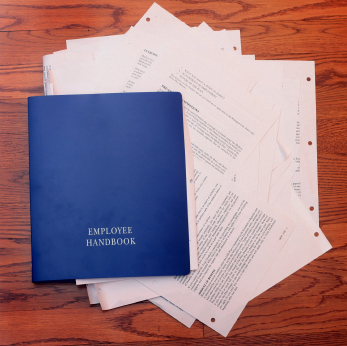
 Another employee handbook did not measure up to the National Labor Relations Board’s (NLRB) scrutiny after it ruled that an employee handbook provision prohibiting employees from having a “conflict of interest” with the employer was facially overbroad and unlawful on its face. See
  We recently wrote about the importance of having an enforceable noncompete in place in order to protect your business (
 Business involves competition. But not all competition is lawful. Two former employees found this out the hard way after a judge determined on May 22, 2015 that they had wrongfully started a competing business while they continued to work for their employer along with misappropriating trade secrets and engaging in other wrongful acts (