 I recently ran across a great article about noncompete agreements, which touch upon two important issues that threaten the success of every non-compete lawsuit: the role choice of law provisions play in noncompete litigation and damages at the preliminary injunction stage of a non-compete lawsuit.
As to the article by Paul O. Lopez, Can Noncompete
 A Court ruled that a company didn’t show a substantial likelihood that it would succeed in enforcing noncompetition restrictions against four former employees. This failure, however, is an important reminder for companies with multi-state operations or employees who may live in a state where non-compete restrictions are not favored or otherwise enforceable.
 Aliphcom, Inc. d/b/a Jawbone won an early legal battle in a lawsuit filed against five of its former employees and its rival Fitbit, Inc.
 An employer illegally fired two employees for criticizing the company on Facebook. This decision comes from the U.S. Court of Appeals for the Second Circuit, which affirmed a National Labor Relations Board decision (NLRB).
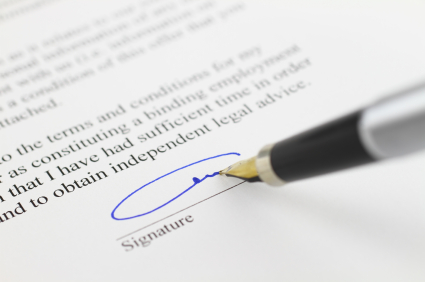 Companies commonly rely on non-compete restrictions to protect their competitive business interests. But if such post-employment restrictions are not properly drafted, those agreements may not be enforceable if challenged in court.
 A decision released on 10/1/2015 from the Department of Labor’s administrative review board (the “Board”) highlighted employment law issues arising at the intersection of whistleblowing, retaliation, and reasonable accommodation involving telecommunication. (
 Employers often overlook the opportunity to limit liability against their business when it comes to employment agreements. And one of the most common ways in which a business can limit its liability is through a contractual limitations period. A recent Michigan Court of Appeals highlights this point.